Andrea CITRINI, Corrado CAMERA, & Giovanni Pietro BERETTA (2020)
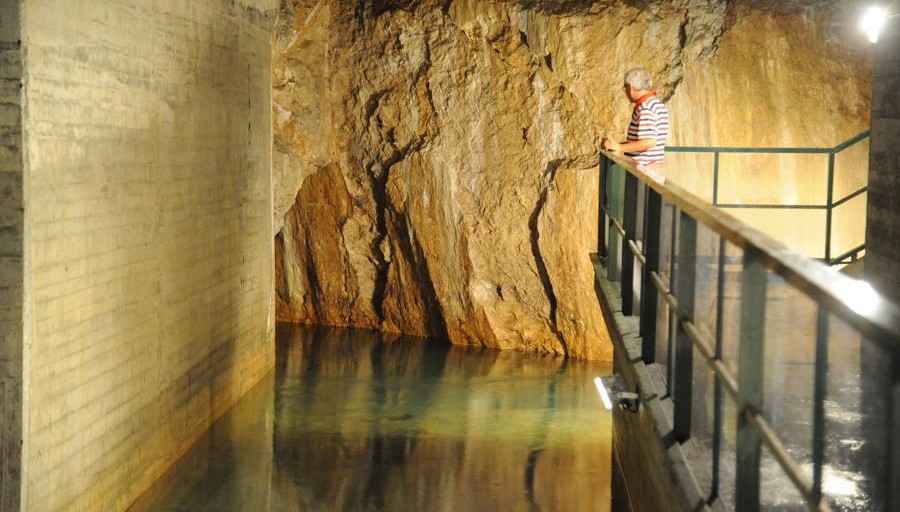
Nossana Spring, a pre-Alpine karst spring in Northern Italy, is a critical drinking water source serving 300,000 people. Climate change is expected to impact hydrological systems, and this study aims to project future discharge rates and evaluate potential supply limitations from 2021 to 2100 under three Representative Concentration Pathways (RCP2.6, RCP4.5, and RCP8.5).** The study integrates regional climate models (RCMs) with a rainfall-runoff model to analyze changes in water availability, addressing concerns over prolonged droughts and shifts in seasonal precipitation.
∇ – Methods
The study follows a four-step approach:
- Climate Model Evaluation
- Bias-corrected EURO-CORDEX Regional Climate Models (RCMs) were used to simulate future climate conditions.
- Three RCMs were selected, covering a range of climate change scenarios.
- Statistical downscaling techniques were applied to refine local climate predictions.
- Bias-corrected EURO-CORDEX Regional Climate Models (RCMs) were used to simulate future climate conditions.
- Hydrological Modeling
- A rainfall-runoff model (GR4J with CemaNeige snow accounting routine) was calibrated and validated using historical data (1998-2017).
- The model simulated spring discharge under future climate conditions.
- Scenario Analysis
- Future climate projections were evaluated for four time periods:
2021–2040, 2041–2060, 2061–2080, and 2081–2100. - The study assessed how discharge rates respond to changes in precipitation, temperature, and snowmelt patterns.
- Future climate projections were evaluated for four time periods:
- Assessment of Supply Risks
- The study analyzed whether discharge levels would fall below critical water demand thresholds.
- The number of days with discharge below critical limits was computed for each scenario.
∇ – Main Results
- Projected Discharge Decline: Future ensemble-mean discharge rates decrease by 3% to 23% across all RCP scenarios compared to historical levels.
- Seasonal Shifts in Precipitation:
- Longer dry summers and wetter autumns are projected, leading to a reduced snowpack and earlier spring runoff.
- Winter and autumn precipitation will increase, but summer rainfall will decrease.
- Water Availability Risks:
- Under RCP8.5 (worst-case scenario), critical low-discharge periods will increase after 2060.
- Days with discharge below water demand thresholds will decrease in most cases but could rise significantly in late-century projections (2081-2100).
- Potential Need for Alternative Water Sources:
- Extended low-flow periods could challenge drinking water supply, requiring alternative water resources.
∇ – Conclusion
The study underscores the vulnerability of karst springs to climate change and highlights the need for long-term water resource management strategies. Future scenarios suggest potential risks to water supply, particularly under high-emission conditions, making adaptation measures crucial.
∇ – Resources
Citrini, A., Camera, C., & Beretta, G. P. (2020). Nossana spring (northern Italy) under climate change: Projections of future discharge rates and water availability. Water, 12(2), 387.
 ∇ - The Water Table
Leave a comment